

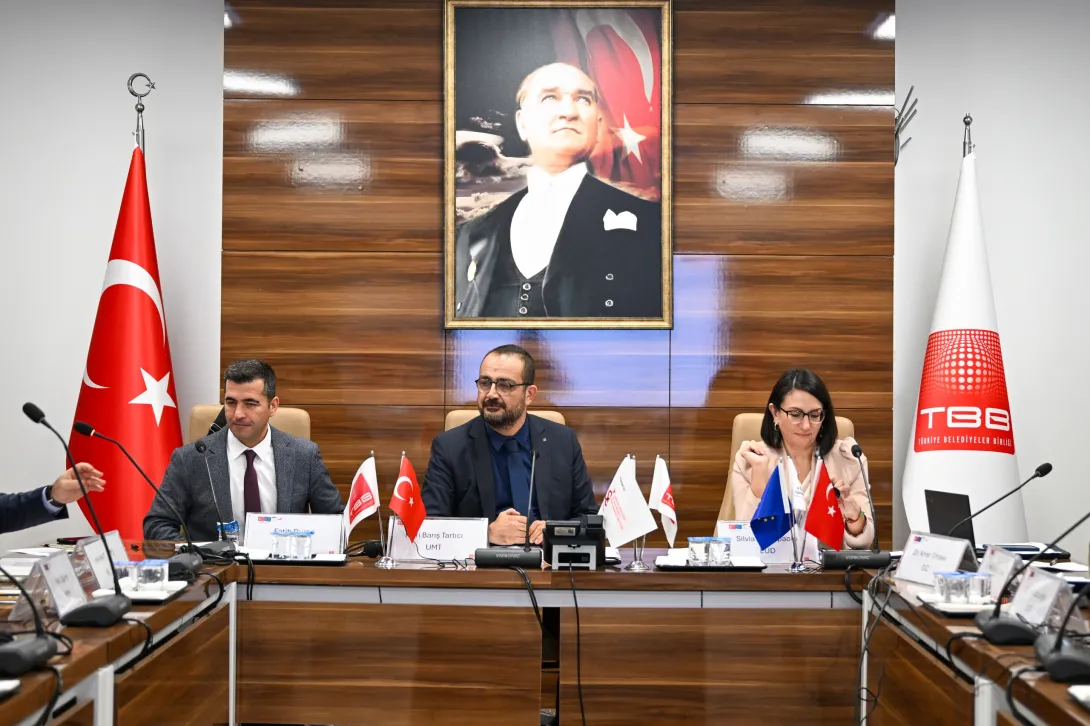
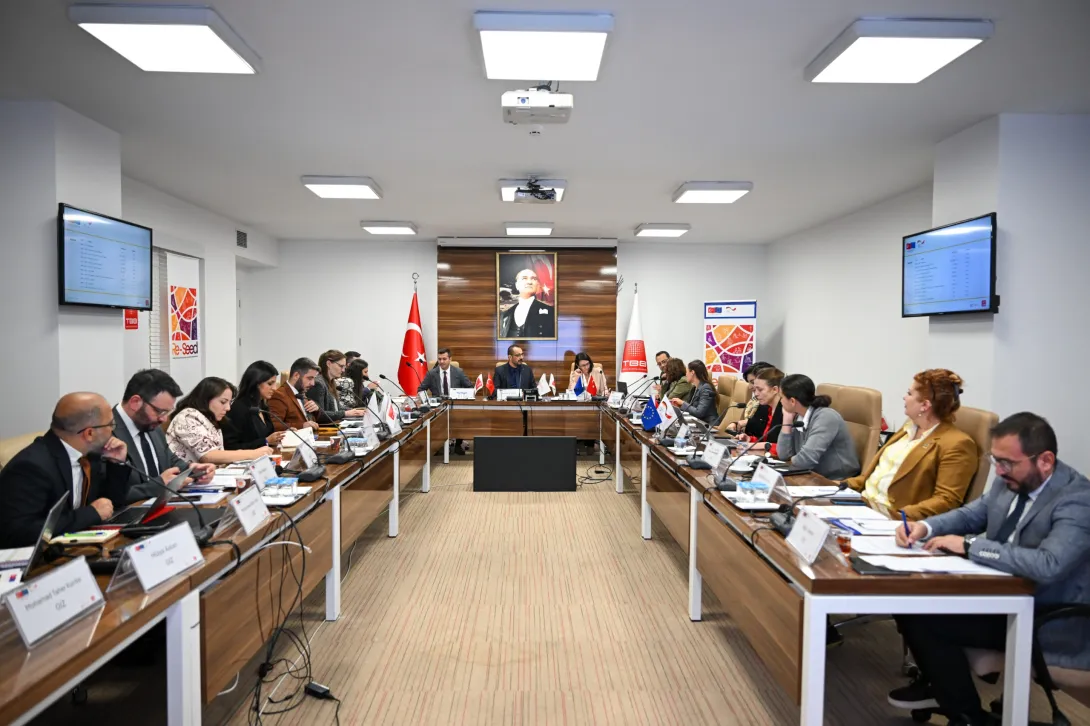
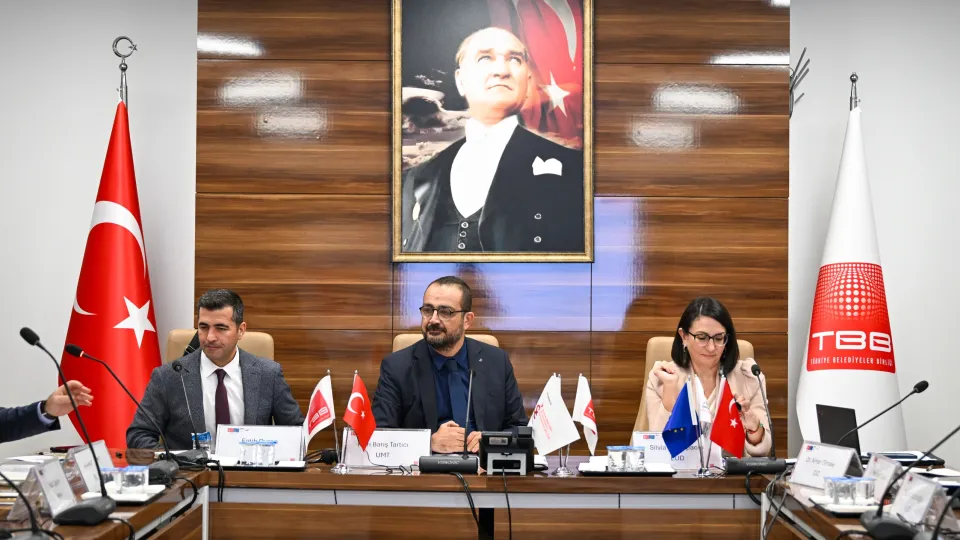
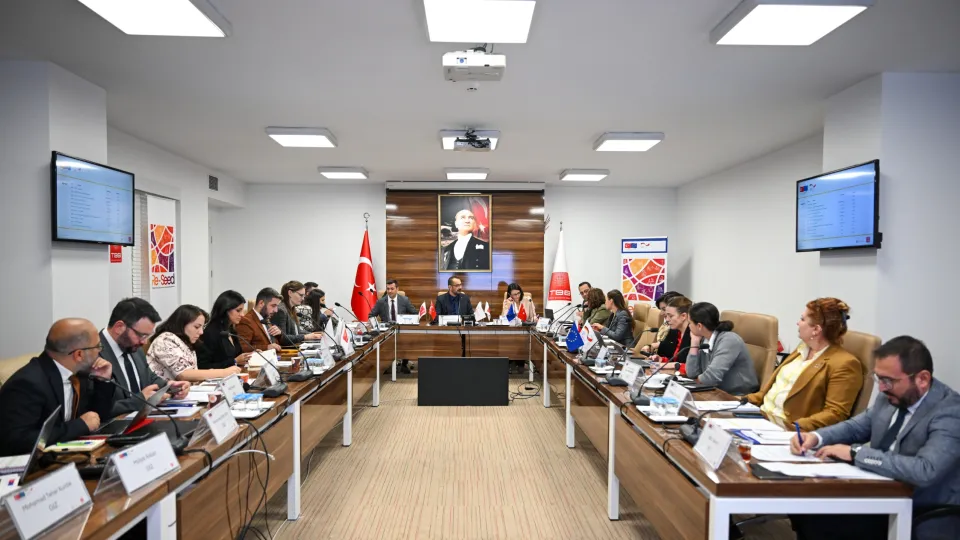
The third Project Monitoring and Steering Committee (PSC) Meeting of the “Sustainable Employment and Socio-Economic Development in Türkiye’s Earthquake-Affected Regions” (RE-SEED) Project, implemented in partnership between the Union of Municipalities of Turkiye (UMT) and the German Agency for International Cooperation (GIZ), was held at UMT headquarters.
The meeting, organized under the project funded by the German Federal Ministry for Economic Cooperation and Development (BMZ) and the European Union (EU), brought together representatives of public institutions, international organizations and the private sector.
Opening remarks were delivered by Fatih Duran, Team Leader of the Coordination Unit for the EU Facility for Refugees in Türkiye (FRiT); Silvia Pietropaolo, Team Leader for Human and Social Development at the Delegation of the European Union to Türkiye; and Nuri Barış Tartıcı, Director of Planning and Projects at UMT.
Duran: “The Project’s Outcomes Are Crucial to Providing Much-Needed Support to Earthquake-Affected Areas”
Fatih Duran emphasized the importance of the RE-SEED Project, particularly in strengthening local government capacities and supporting formal employment in earthquake-affected areas.
He noted that the project forms part of a broader support package aimed at assisting both public institutions and local governments, stressing that its outcomes are critical to ensuring that the necessary assistance reaches earthquake-affected communities.
Drawing attention to the growing significance of Syrian refugees’ return to their country following the change of regime in Syria, Duran said:
“As long as these trends continue, supporting those planning to return and ensuring their sustainable reintegration into society will remain among the key priorities.”
Pietropaolo: “We Must Make the Most Efficient Use of the Remaining Implementation Period”
Silvia Pietropaolo described RE-SEED as one of the key projects implemented under the EU Facility for Refugees in Türkiye and provided an assessment of its current stage of implementation.
Emphasizing the need to make the most effective use of the remaining project period, Pietropaolo highlighted the importance of ensuring that assistance reaches those who genuinely need it and delivers tangible, sustainable results.
Tartıcı: “An Important Period Lies Ahead”
Nuri Barış Tartıcı, Director of Planning and Projects at UMT, expressed satisfaction with the progress achieved in activities focusing on the labor market and entrepreneurship under the project. He also highlighted the important role of municipalities in these areas.
Referring to Kahramanmaraş as an example, Tartıcı noted that significant results had been achieved in labor market development, entrepreneurship and employment.
He emphasized that municipal initiatives are essential to restoring, maintaining and sustaining quality of life in cities affected by the earthquakes.
Stressing the need to accelerate post-earthquake recovery and the associated economic revitalization process as much as possible, Tartıcı said:
“An important period lies ahead, both in terms of accelerating implementation on the ground and gaining a clearer understanding of the results achieved.”
Current Status of the Project Reviewed
The meeting addressed the project’s current implementation status, progress towards its objectives, challenges encountered and long-term sustainability prospects.
Participants were also presented with project performance indicators, a financial overview and proposed solutions developed on the basis of experiences and lessons learned from field implementation.